Get out of the Arizona jail without paying the full bail. Explore bonds, payment plans, and release options with The Bail Barn. Call today.
Table of Contents
- Understanding Bail in Arizona Courts
- Why Full Bail Payment Isn’t Your Only Option
- Bail Bonds: Release Without Full Cash
- Payment Plans and Installment Options
- Release on Your Own Recognizance (ROR)
- Unsecured Bonds and Conditional Release
- Pretrial Services and Supervision Programs
- How to Request Lower Bail or Alternative Release
- Financial Hardship and Court Considerations
- Common Mistakes to Avoid
- FAQs
- Conclusion
- CTA
Understanding Bail in Arizona Courts
In the meantime, bail keeps you in jail until trial. The judge sets the amount at your first hearing. Most people think they must pay the full bail.
This is wrong. Arizona offers many release options. You don’t need all the cash upfront.
Bail serves one purpose only. It ensures you return for court dates. The judge wants to see you show up.
Arizona courts understand money is tight. They created alternatives for people like you. These options help you get out and stay out.
How Arizona’s Bail System Works
The judge looks at your case carefully. They check your criminal history. They review the charges against you.
Your ties to the community matter most. Do you have a job? Do you have family here? As a result, do you own property in Arizona?
The judge considers your flight risk. Will you run away? Are you likely to return? Your answers determine your bail amount.
Why Bail Amounts Vary
Serious crimes get higher bail. Violent offenses mean stricter conditions. Drug charges get moderate bail amounts.
First-time offenders get lower bail. People with stable jobs get help. Those with family ties get better treatment.
The judge balances public safety and fairness. At the same time, they want you out while ensuring everyone’s safety. Arizona law guides its decisions carefully.
Why Full Bail Payment Isn’t Your Only Option
Paying full bail is expensive and unnecessary. Most people cannot afford thousands of dollars. Arizona recognizes this reality completely.
The state created alternatives for financial hardship. These options let you get released affordably. You can choose what works for your situation.
The Real Cost of Full Bail
Full bail means paying the entire amount. If bail is $5,000, you pay $5,000 cash. You get it back only if you show up for court.
This is impossible for many people. Working families struggle with this amount. Low-income people cannot pay at all.
Arizona knows this creates unfairness. Poor people stay in jail longer. Rich people go home immediately. The system needed to change.
Legal Alternatives Available
Bail bonds cost only a percentage. Payment plans spread costs over time. Release on recognizance needs no money.
Unsecured bonds require no upfront payment. Pretrial services supervise your release. At the same time, conditional release adds requirements instead of money.
Each option serves different situations. Your lawyer helps you choose the best one. The court approves what works for you.
Bail Bonds: Release Without Full Cash
Bail bonds are the most popular alternative. A bail bondsman pays your bail for you. You pay them a small percentage instead.
Arizona bail bonds typically cost 10-15% of bail. If bail is $5,000, you pay $500-$750. This is far less than full bail.
How Bail Bonds Work in Arizona
You contact a bail bondsman immediately. They ask about your case and background. They verify your information quickly.
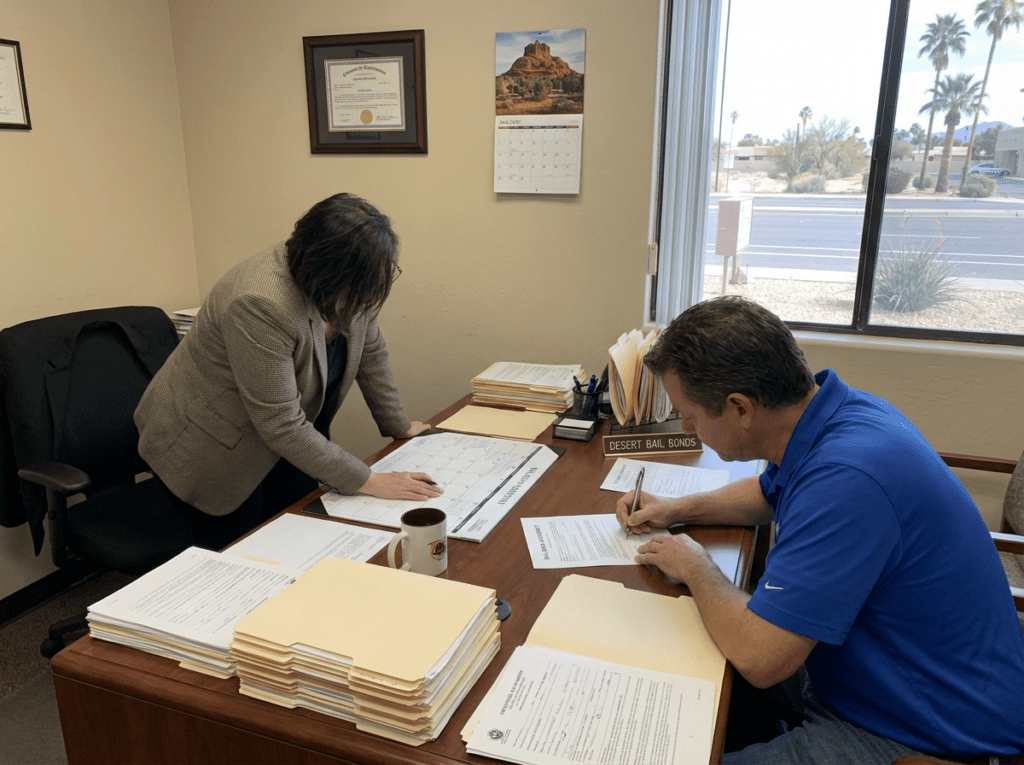
The bondsman pays the court your full bail. You pay them their fee directly. You sign an agreement to follow all conditions.
The bondsman becomes responsible for you. They monitor your compliance carefully. They report violations to the court.
Why Bail Bonds Help Financially
You pay a fraction of the bail amount. The fee is non-refundable but affordable. Most families can gather this money quickly.
Bail bondsmen offer payment plans, too. You can pay the fee over weeks. This spreads costs across your budget.
The bondsman handles court paperwork. They manage all legal details. You focus on your case and freedom.
Finding a Reputable Bail Bondsman
Ask your lawyer for recommendations. They know trustworthy bondsmen in Arizona. They avoid predatory operators.
Check online reviews and ratings. Look for licensed, insured companies. Verify they operate legally in Arizona.
Never pay upfront fees before release. Legitimate bondsmen collect fees after. Most importantly, avoid anyone asking for money before work.
Payment Plans and Installment Options
Courts allow payment plans for bail. You don’t pay everything at once. You make monthly payments instead.
Arizona judges understand financial reality. They approve installment plans regularly. This helps working families stay together.
Requesting a Payment Plan
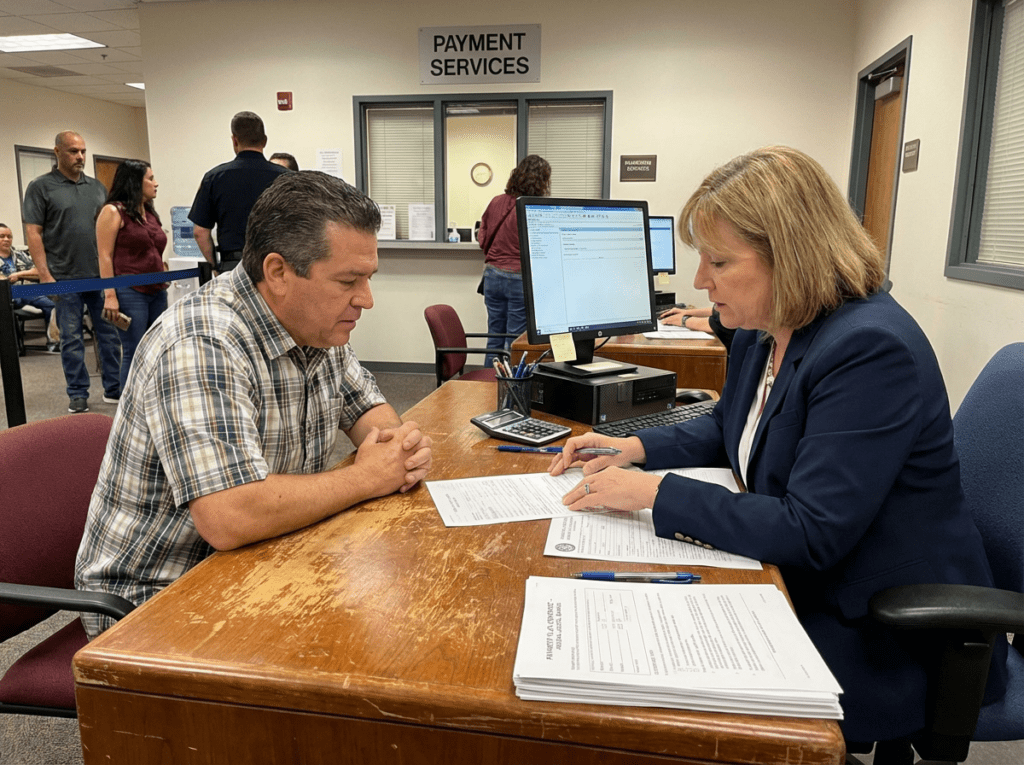
Ask your lawyer to request this option. They file a motion with the court. The judge reviews your financial situation.
Bring proof of your income and expenses. Show your bills and debts. Explain why a lump sum payment is impossible.
The judge may approve a plan. You pay monthly amounts over time. The court sets the schedule.
How Payment Plans Work
You pay a percentage each month. The court sets the amount based on income. You make payments to the court directly.
Missing payments violates your bail conditions. The court can revoke your release. Always pay on time without fail.
Payment plans require honesty about finances. However, don’t claim poverty if you have money. The court checks your information carefully.
Benefits of Installment Payments
You keep your job and home. Your family stays together during the trial. You prepare your defense properly.
Installment plans are affordable and manageable. You budget money like regular bills. This works for most working people.
Release on Your Own Recognizance (ROR)
Release on recognizance means freedom without money. The judge releases you on your promise. You sign a document agreeing to return.
ROR is the best option available. You pay nothing at all. The court trusts you to show up.
Who Gets ROR in Arizona
First-time offenders qualify most often. People with stable jobs get approved. Those with family ties in Arizona qualify.
Minor charges result in ROR frequently. Drug possession might qualify. Theft charges sometimes qualify.
Serious crimes rarely get ROR. Violent offenses don’t qualify. Murder charges never get ROR.
How to Request ROR
Your lawyer argues for your release. They present evidence of your ties. They show your stable employment.
So, they highlight your family connections. As a result, they demonstrate that you are not a flight risk. They convince the judge that you’ll return.
The judge decides based on evidence. They may grant ROR immediately. They might deny it and offer alternatives.

Conditions of ROR Release
You must follow all court orders. You attend every hearing on time. So, you maintain your current address.
Therefore, you cannot leave Arizona without permission. You report to pretrial services. So, you submit to drug tests if required.
Breaking ROR conditions means jail. The court revokes your release. You face new criminal charges.
Unsecured Bonds and Conditional Release
Unsecured bonds require no money upfront. The court sets a bail amount. You don’t pay unless you violate conditions.
This option helps people with no savings. You get released immediately. You pay only if you break the rules.
Understanding Unsecured Bonds
The court sets an amount like regular bail. You don’t pay this amount upfront. You only pay if you violate conditions.
If you follow all the rules, you pay nothing. The bond disappears when your case ends. You’re released on your promise.
Unsecured bonds work like ROR. The difference is a set amount. This amount applies if you violate conditions.
Conditional Release Requirements
The court adds specific conditions. You might need electronic monitoring. You might need regular check-ins.
Therefore, you might need drug testing. So, you might need to maintain employment. You might need to avoid certain people.
These conditions replace bail money. Following them keeps you free. Breaking them means jail and payment.

When Conditional Release Applies
Drug cases often use conditional release. Property crimes sometimes qualify. Assault charges might qualify.
The court matches conditions to your offense. They protect the community. They ensure your return to court.
Pretrial Services and Supervision Programs
Pretrial services supervise released defendants. They monitor your compliance with conditions. They report to the court regularly.
Arizona uses pretrial services extensively. These programs help judges track defendants. They reduce jail populations safely.
How Pretrial Services Work
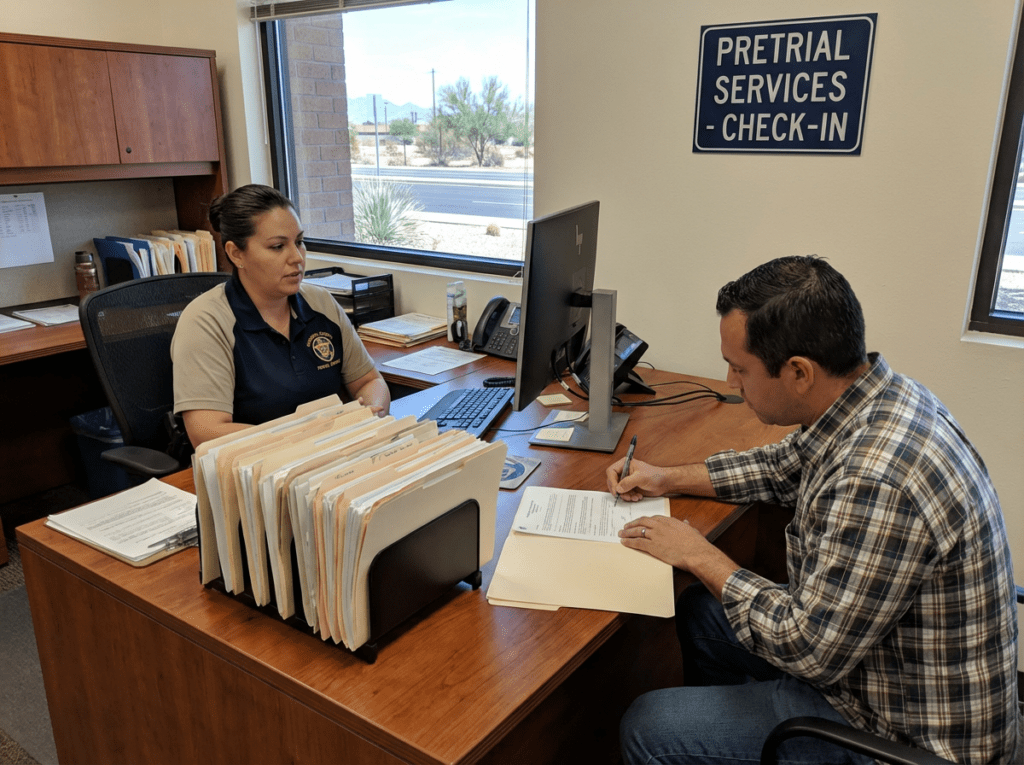
You check in with an officer regularly. Some check-ins are in person. Others are by phone or video.
The officer verifies your address. They confirm your employment. Also, they check your compliance with conditions.
They conduct drug tests if ordered. However, they monitor electronic monitors. They report everything to the court.
Benefits of Pretrial Supervision
You stay out of jail while supervised. The court trusts you more. Your case moves faster through the system.
Judges see your compliance. Therefore, this helps at sentencing later. Good behavior reduces your sentence.
So, pretrial services cost less than jail. The court saves money. You save money too.
Requirements for Pretrial Programs
You must show up for all appointments. Missing appointments is a violation. The court can revoke your release.
You must be honest with your officer. Tell them about changes in your life. Report new jobs or address changes.
You must follow all conditions exactly. No exceptions are allowed. One violation can mean jail.
How to Request Lower Bail or Alternative Release
Your lawyer can request better options. They file motions with the court. The judge reviews your situation.
Filing a Motion to Reduce Bail
Your lawyer prepares written arguments. Evidence of your community ties is presented.
Financial hardship is clearly explained. Arguments are made that the bail amount is excessive.
A reduction is formally requested. Alternative release options are proposed. The prosecutor can object to your request. The judge hears both sides. The judge makes the final decision.
Presenting Financial Hardship Evidence
Bring recent pay stubs from your job. Show your monthly expenses and bills. List your debts and obligations.
Explain why you cannot pay bail. Show your savings account balance. Provide proof of financial struggle.
The court considers your actual situation. They don’t assume you’re poor. You must prove your hardship.
Timing Your Request
Request a lower bail at your first hearing. Don’t wait for later court dates. Early requests get better results.
Your lawyer prepares arguments immediately. They gather evidence quickly. They present your case strongly.
The judge is more open early in the case. They have fewer details about you. Your evidence makes a stronger impression.
Financial Hardship and Court Considerations
Arizona courts take financial hardship seriously. The law requires judges to consider it. Your poverty is a legal factor.
What Counts as Financial Hardship
Unemployment means hardship. Minimum wage jobs mean hardship. Supporting dependents on little income means hardship.
Medical bills and debts count. Housing costs matter. Transportation expenses are considered.
The court looks at your whole situation. They don’t judge you harshly. They understand real financial struggles.
How Courts Evaluate Your Situation
Your income and expenses are carefully reviewed to determine affordability, and bail is set based on that assessment.
Employment stability is evaluated, along with your housing situation and family responsibilities.
Public safety is weighed against fairness in the decision. Release is considered when appropriate, all in strict compliance with Arizona law.
Legal Protections for Poor Defendants
Arizona law protects your rights. Judges cannot set bail you cannot pay. They must consider alternatives.
You have the right to a lawyer. Public defenders help poor people. They fight for your release.
You have the right to a hearing. You can present evidence. So, you can argue your case.

Common Mistakes to Avoid
Many people make costly mistakes. These errors keep them in jail longer. Avoid these problems completely.
Mistake 1: Not Requesting Alternatives
Some people accept high bail. They don’t ask for lower amounts. They don’t request alternatives.
Always ask your lawyer to request options. The court might approve them. You have nothing to lose.
Mistake 2: Lying About Your Finances
Never lie about your income or savings. The court checks everything. They find the truth eventually.
Lying destroys your credibility. The judge loses trust in you. Your case gets much worse.
Be honest about your situation. Courts respect honesty. They help people who tell the truth.
Mistake 3: Missing Court Dates or Check-Ins
Missing appointments violates your release. The court revokes your freedom. You go back to jail.
Always show up on time. Mark dates on your calendar. Set phone reminders for appointments.
Mistake 4: Violating Bail Conditions
Breaking conditions means new charges. You face additional penalties. Your sentence gets longer.
Follow every condition carefully. Ask questions if unsure. Contact your lawyer before breaking the rules.
Mistake 5: Not Hiring a Lawyer
Public defenders help poor people. They fight for your release. They know all available options.
Never go to court without a lawyer. You cannot navigate the system alone. Lawyers get better results.
FAQs

Can I get released without paying anything in Arizona?
Yes, release on recognizance (ROR) requires no payment. The judge releases you on your promise. You sign an agreement to return to court. Not everyone qualifies for ROR. First-time offenders have better chances. Stable employment and family ties help. Ask your lawyer to request ROR at your hearing.
What if I cannot afford a bail bondsman’s fee?
Payment plans are available from bondsmen. You can pay the fee over weeks. Some charge as little as $100 upfront. Ask about installment options immediately. Bondsmen want to help you. They work with people in financial hardship. Never pay large upfront fees.
How long does it take to get released with alternatives?
Bail bonds release you within hours. Payment plans take longer to approve. ROR release happens at your first hearing. Electronic monitoring takes a few hours. Pretrial services start within days. Your lawyer speeds up the process. Ask them to expedite everything possible.
Conclusion
Getting released from the Arizona jail without full bail is possible. You have many legal options available. Your financial situation matters to the court.
Bail bonds are affordable and fast. Payment plans spread costs over time. Release on recognizance requires no money. Unsecured bonds protect your freedom. Pretrial services supervise your release. Conditional release adds requirements instead of money.
Your lawyer fights for your release. They know all available options. They present your case effectively. However, they argue for your freedom strongly.
The Bail Barn understands your situation. We help people get released affordably. We guide you through every option. Support you every step of the way.
Don’t stay in jail if you don’t have to. Request alternatives immediately. Your freedom depends on quick action. Your family needs you home. Its your job that depends on your release. Your case improves with your freedom.
Arizona courts want to help. They created these alternatives for you. Use them to stay free and out of jail.
CTA
Stuck in jail and cannot pay bail? Need help finding affordable release options? Call The Bail Barn now for immediate assistance.
Our team knows Arizona law inside and out. We help you get released today. We explain all your options clearly. So, we guide you to the best choice for your situation.
Don’t wait another day in jail. Contact us immediately for help. We answer 24/7 for your emergency. We work fast to get you released. Also, care about your freedom and family.
Website: www.thebailbarn.com
Hours: 24/7 Available
Call The Bail Barn right now. We’re here for you. We help you get out today.
Tags
ArizonaBail, BailAlternatives, TheBailBarn